Car Squeals When Accelerating? Upload Your Sound & Find the Possible Cause With AI
Hear a squeal only when you step on the gas? Upload a short recording and Carithm AI analyzes the noise pattern against engine load to help identify possible causes like belt slip, a failing tensioner, pulley bearings, or alternator drag.
Many drivers search for answers like: why does my car squeal when I accelerate, why does my belt squeal under load, or why does the squeal get louder the harder I press the gas. We built this tool to give you instant answers without the guesswork.
Upload Your Acceleration Squeal Sound
Upload a short audio recording from your phone while the squeal is happening, ideally while accelerating from a stop. Our AI car sound analyzer examines acoustic patterns linked to:
What Carithm Can Analyze
- Serpentine belt slip under load
- Belt tensioner and idler pulley wear
- Alternator or water pump bearing drag
- RPM-correlated squeal frequency shifts
Stop driving now if you also smell burning rubber, see smoke, have a battery warning light, or the engine starts running hot. Full safety checklist ↓
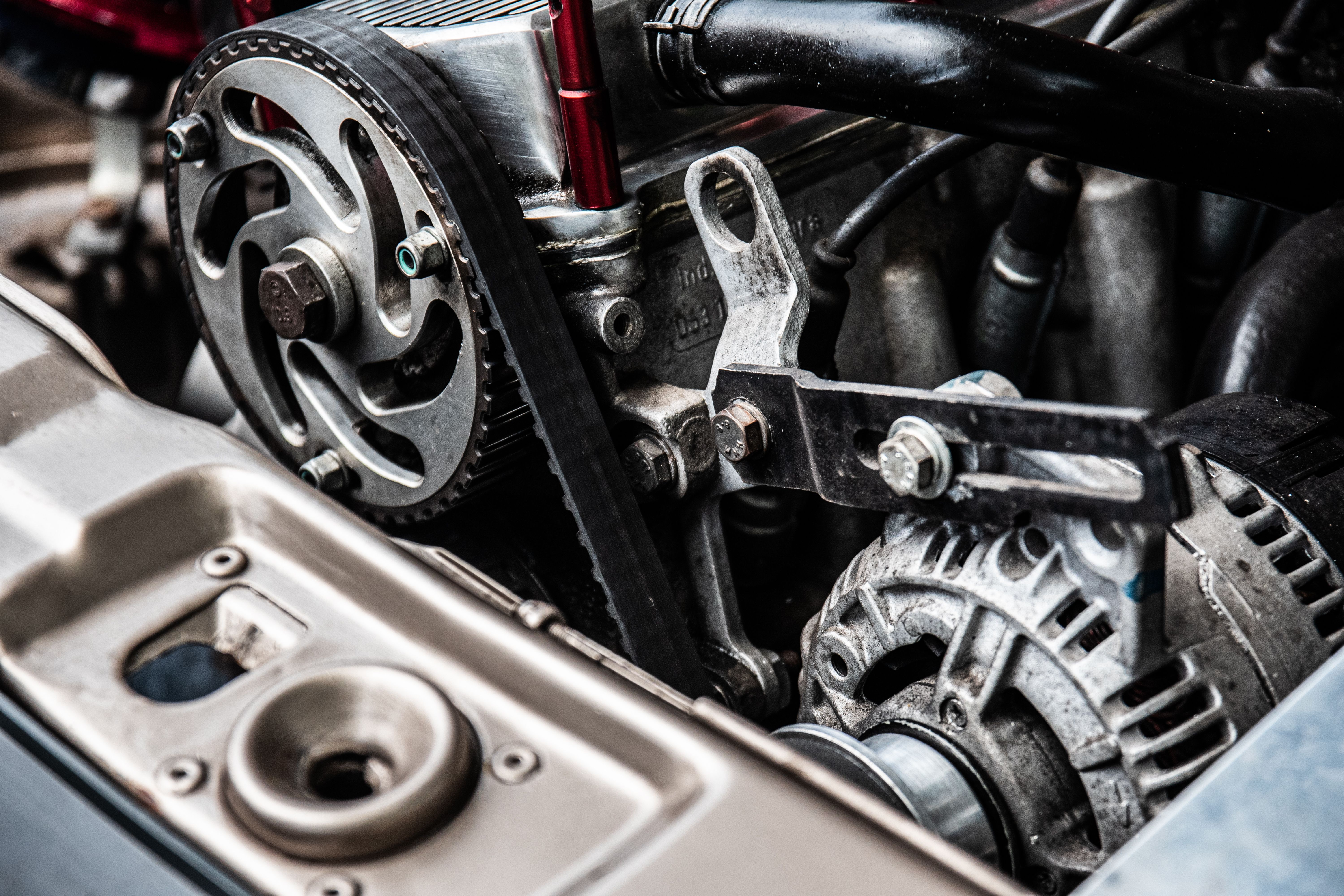
Why Does My Car Squeal When Accelerating?
Why does the squeal only happen when I press the gas?
Accelerating spikes engine RPM quickly, which puts sudden torque on the serpentine belt and everything it drives. A belt or tensioner that's marginal at idle often can't keep up with that sudden load, so it slips and squeals.
Why does the squeal get louder the harder I accelerate?
More throttle means more torque demand on the belt system. A belt near the end of its life or a weak tensioner spring will slip more visibly as load increases, so the squeal scales with how hard you're accelerating.
Why does my car squeal when accelerating but not at idle?
At idle, the belt system carries relatively little load, so a marginal belt can still grip enough to stay quiet. Acceleration is often the first condition to expose a slipping belt or failing tensioner.
Could it be the alternator instead of the belt?
Possibly. A failing alternator bearing resists rotation, and that added drag under the higher load of acceleration can produce a squeal even if the belt itself is fine.
Why does it squeal when accelerating from a cold start?
Cold, stiff rubber grips pulleys less effectively. Combine that with the sudden torque of acceleration and a borderline belt is more likely to slip until things warm up.
What Different Acceleration Squeals Usually Mean
Brief squeal that fades as RPM climbs:
Often a belt that grips better once fully engaged, but still worth checking for early wear.
Squeal that scales directly with throttle input:
Classic sign of belt slip or a weak tensioner losing spring pressure.
Constant high-pitched squeal under any load:
Often points to a failing pulley bearing or alternator bearing dragging on the belt.
Squeal only on hard acceleration, not gentle:
Usually a marginal belt or tensioner that can handle light load but not sudden torque spikes.
How Much Does It Cost To Fix a Squeal When Accelerating?
Knowing the rough price range takes some of the fear out of the "how bad is this" question. Treat these as ballpark estimates (parts and labor combined).
| Repair Type | Estimated Cost Range |
|---|---|
| Serpentine belt replacement | $50 - $250 |
| Belt tensioner replacement | $150 - $500 |
| Idler pulley bearing replacement | $150 - $600 |
| Alternator replacement | $400 - $1000 |
| Water pump replacement | $300 - $900 |
Can You Drive With a Squeal When Accelerating?
It depends on the cause. Some acceleration squeals are minor warnings, while others can indicate a belt-driven component close to failing.
- Stop driving if you notice smoke, burning rubber smell, overheating, a battery warning light, or the steering suddenly feeling heavy.
- A brief squeal only on hard acceleration may be less urgent, but it should still be checked before it worsens.
- A loud squeal on every acceleration, or one that's getting louder over days, should be investigated soon since a belt can fail without much warning.
Other Squealing Scenarios You Can Diagnose
Squeal happening in a different situation? Use Carithm to check these related scenarios:
Questions People Ask About Squealing When Accelerating
Why does my car squeal only when I accelerate?
Accelerating spikes engine RPM fast, which puts sudden torque on the serpentine belt and the accessories it drives. If the belt is glazed, loose, or a tensioner is weak, that sudden load makes it slip and squeal instead of gripping cleanly.
Is it safe to drive if my car squeals when accelerating?
Usually yes for a short trip if the squeal is brief and doesn't worsen. It becomes unsafe if you also notice the battery light on, the engine running hot, smoke, or a burning rubber smell, since those suggest the belt could fail outright.
Can a squeal when accelerating mean the alternator is failing?
Yes. A failing alternator bearing can resist rotation, forcing the belt to drag and squeal harder under the extra load that acceleration puts on it.
Will the squeal go away on its own?
Rarely, and usually only temporarily. Belts can loosen or glaze further over time, so a squeal that starts occasionally under acceleration tends to become more frequent rather than resolve itself.
Does a squeal when accelerating mean the belt needs full replacement?
Not always. Sometimes it's a tensioner that's lost spring pressure rather than the belt itself. A mechanic can usually tell by inspecting belt wear versus tensioner deflection.
Why does the squeal get louder the harder I accelerate?
Harder acceleration means higher RPM and more torque demand on the belt system. A marginal belt or tensioner that barely holds at idle will slip more visibly as load increases, which is why the squeal scales with how hard you press the gas.
Could it be a CV joint or transmission noise instead of a belt?
It's possible, but those typically produce clicking or clunking rather than a squeal, and often occur while turning or shifting rather than purely from RPM increase. A true squeal under acceleration points to the belt drive system first.
Can low power steering fluid cause squealing when accelerating?
Low power steering fluid more often causes a squeal or whine when turning the wheel rather than purely from acceleration, though a struggling pump can add drag to the belt system in general.